

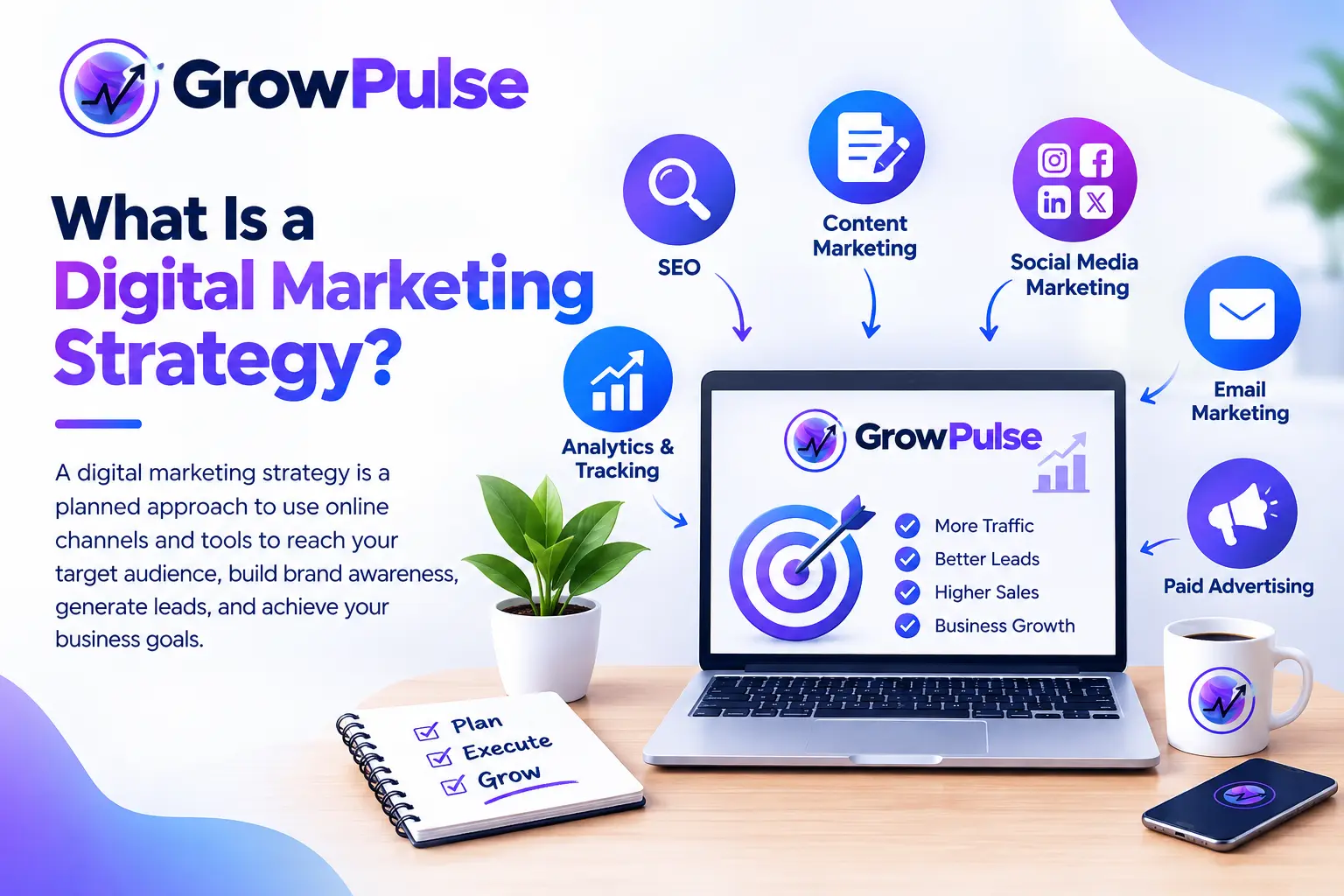
Building an online presence is no longer enough to grow a business. You need a clear digital marketing strategy that helps you reach the right audience, generate quality leads, and turn visitors into customers. A well-planned strategy combines SEO, content marketing, social media, email marketing, paid advertising, and conversion optimization to achieve measurable business goals.
Whether you are a small business owner, startup, or marketing professional, having a structured digital marketing strategy can help you use your time and budget more effectively. In this guide, you’ll learn how to build a winning digital marketing plan step by step and choose the right channels to grow your business online.
What Is a Digital Marketing Strategy?
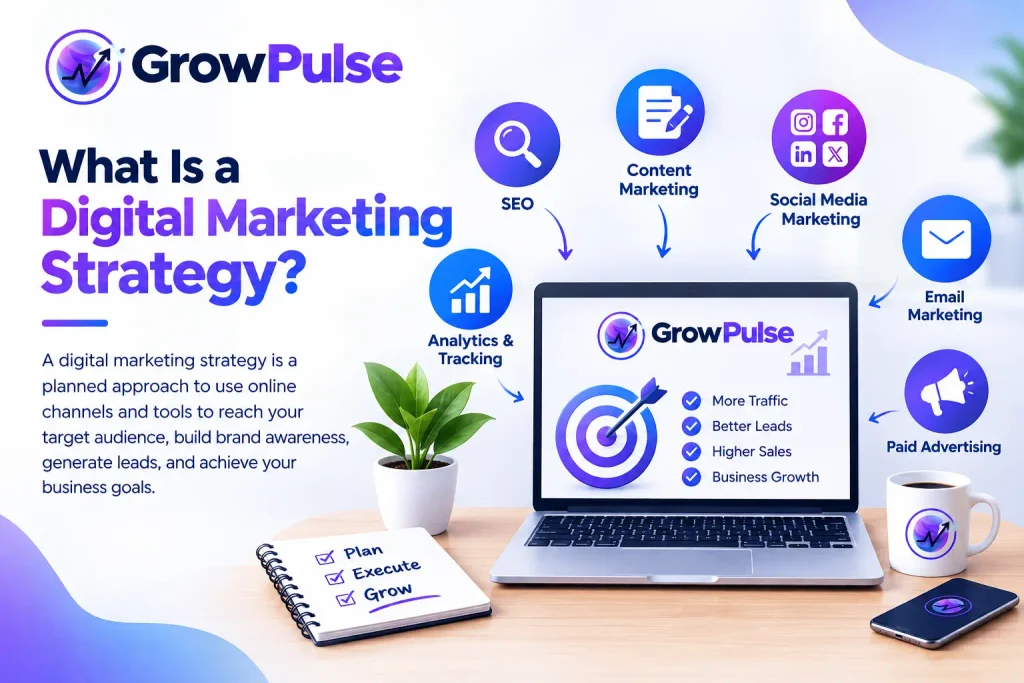
A digital marketing strategy is a structured plan for promoting a business through online channels.
These channels can include search engines, websites, social media, email, content marketing, online advertising, and other digital platforms.
The main purpose is not simply to get more views or followers. The goal is to attract the right audience and move them from awareness to interest, consideration, and eventually conversion.
For example, a local business might use SEO to appear in Google searches, publish helpful blog content to build trust, use Instagram to engage its audience, and run paid advertisements to generate leads.
When these activities work together, they become part of a larger digital marketing strategy.
Why Does Your Business Need a Digital Marketing Strategy?
Without a strategy, digital marketing can quickly become expensive and difficult to manage.
You may publish content consistently but attract very little traffic. You may run advertisements without understanding which audience converts best. Or you may get website visitors but fail to turn them into customers.
A strategic approach helps solve these problems.
Build Brand Awareness
People usually need multiple interactions with a business before they are ready to buy. Consistent content, search visibility, and social media activity can help your brand become more recognizable.
Reach the Right Audience
Digital marketing allows you to target people based on their interests, search behavior, location, demographics, and other factors.
Generate Quality Leads
A well-planned strategy focuses on attracting people who are genuinely interested in your products or services rather than chasing random traffic.
Increase Conversions
Getting visitors is only one part of marketing. Your website, landing pages, offers, and calls to action should work together to turn visitors into leads or customers.
Measure Your Results
One of the biggest advantages of digital marketing is that you can track performance. This allows you to understand what is working and where improvements are needed.
How to Build a Digital Marketing Strategy
Creating a strategy does not have to be complicated. The key is to start with your business objectives and build each part around them.
1. Define Your Business Goals
Before choosing a marketing channel, decide what you want to achieve.
Your goals might include:
- Increasing website traffic
- Generating leads
- Increasing online sales
- Building brand awareness
- Growing an email list
- Improving customer engagement
Try to make your goals specific and measurable.
For example, instead of saying, “I want more traffic,” a stronger goal would be, “I want to increase organic website traffic over the next six months.”
Clear goals make it easier to choose the right tactics and measure success.
2. Understand Your Target Audience
You cannot create an effective digital marketing strategy without knowing who you are trying to reach.
Think about your ideal customer.
What problems are they trying to solve? What questions do they search for online? Which platforms do they use? What influences their buying decisions?
Creating a simple customer profile can help you understand their needs and create marketing messages that feel relevant rather than generic.
The better you understand your audience, the easier it becomes to create content that gets attention and earns trust.
3. Research Your Competitors
Competitor research can reveal opportunities that you may have missed.
Look at the businesses competing for your audience and analyze:
- What keywords they target
- What type of content they publish
- Which social platforms they use
- What offers they promote
- Which pages attract the most attention
The objective is not to copy competitors. Instead, find gaps and think about how your business can provide something more useful, clearer, or different.
4. Choose the Right Digital Marketing Channels
You do not need to be everywhere.
A common mistake is trying to manage every digital platform at the same time. This often leads to inconsistent content and wasted resources.
Choose channels based on your audience and goals.
SEO
SEO helps your website appear in organic search results when people are looking for information, products, or services related to your business.
Content Marketing
Blog posts, guides, videos, and educational content can answer customer questions and build authority over time.
Social Media Marketing
Social media can help you build relationships, distribute content, increase brand awareness, and engage with your audience.
Email Marketing
Email can be useful for nurturing leads, building customer relationships, and encouraging repeat purchases.
Paid Advertising
Platforms such as search and social advertising can help businesses reach targeted audiences more quickly, although paid campaigns need careful planning and ongoing optimization.
The best strategy often combines several channels instead of depending entirely on one.
5. Create a Content Strategy
Content is one of the most important parts of digital marketing.
However, simply creating more content does not guarantee better results.
Your content should have a purpose.
For example, some content can help people discover your brand, while other content can answer detailed questions, compare solutions, demonstrate expertise, or encourage a purchase.
A strong content strategy should consider different stages of the customer journey.
Awareness: Educational blogs, social posts, videos, and beginner guides.
Consideration: Comparisons, case studies, detailed guides, and product or service information.
Decision: Testimonials, offers, demos, consultations, and strong calls to action.
This approach allows your content to support the entire buying journey.
6. Build an SEO Strategy
SEO should be a core part of a long-term digital marketing strategy.
Start by identifying relevant search terms that your audience actually uses. Then create useful content around those topics and organize your website logically.
On-page SEO can include optimizing titles, headings, URLs, internal links, images, and page content.
Technical SEO is also important because search engines need to crawl and understand your website efficiently.
Do not focus only on inserting keywords. Search engines and users both benefit from content that clearly answers the searcher’s question.
7. Use Social Media Strategically
Social media works best when it is treated as a communication channel rather than just a place to promote products.
Share useful information, answer questions, show your expertise, discuss industry trends, and create content that your audience actually wants to consume.
Consistency matters, but quality matters too.
Instead of posting every day without a clear purpose, develop a content calendar based on your audience and business goals.
8. Plan Your Conversion Funnel
A digital marketing strategy should not stop when someone visits your website.
Think about what happens next.
A simple funnel might look like this:
Search or Social Media → Website → Valuable Content → Lead Magnet or Inquiry → Follow-Up → Conversion
Each stage should have a clear purpose.
For example, a blog post may attract organic traffic, while a downloadable guide or consultation form can capture interested visitors as leads.
Your goal is to make the next step obvious and useful.
9. Track the Right Metrics
Not every marketing number tells you whether your strategy is successful.
Website traffic can be useful, but traffic alone does not pay the bills.
Depending on your goals, you may want to track:
- Organic traffic
- Leads generated
- Conversion rate
- Click-through rate
- Engagement
- Cost per lead
- Customer acquisition cost
- Return on investment
Review your data regularly and identify which activities are producing meaningful results.
Common Digital Marketing Strategy Mistakes
Even a well-designed plan can fail when it is executed poorly.
One common mistake is trying to reach everyone. A clearly defined audience usually produces stronger messaging.
Another mistake is focusing only on short-term results. SEO and content marketing often require consistency and patience, while paid advertising may provide faster visibility but needs ongoing optimization.
Ignoring mobile users, failing to update old content, publishing without a clear objective, and not measuring conversions are also common problems.
The solution is to keep testing, learning, and improving.
Digital Marketing Strategy Example
Imagine a small company that wants to generate more leads online.
The company first defines its target audience and identifies the main problems customers are searching for.
It then creates useful blog content around those topics, optimizes the website for relevant search terms, shares the content through social media, and creates a landing page with a clear enquiry form.
Instead of treating SEO, content, social media, and lead generation as separate activities, everything supports the same business goal.
That is the real value of having a strategy.
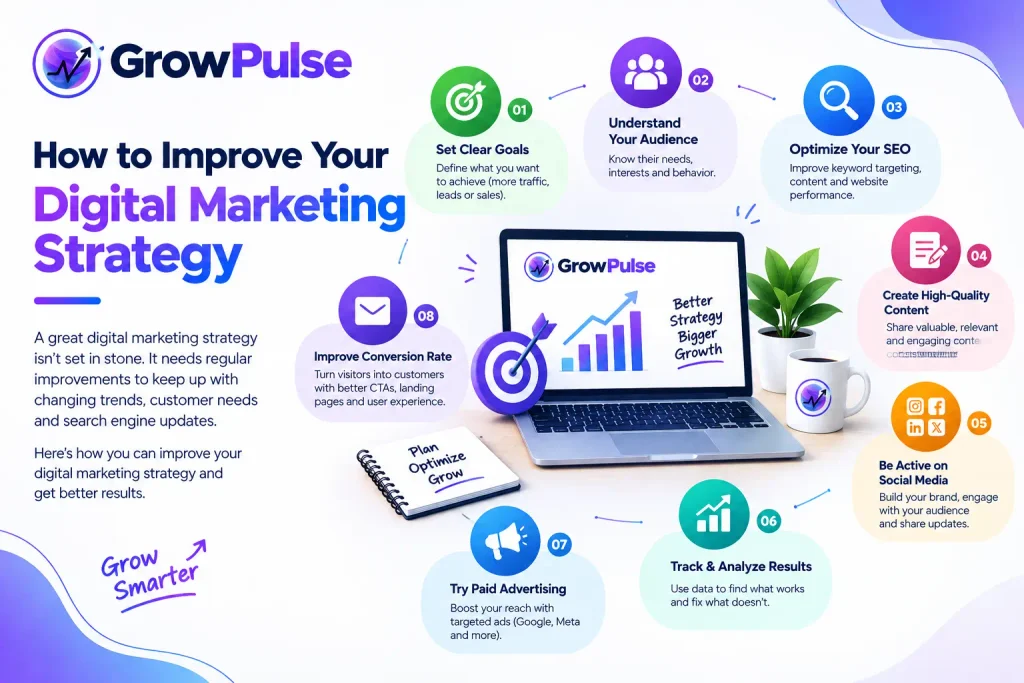
How to Improve Your Digital Marketing Strategy
Your first strategy does not need to be perfect.
Start with a clear goal, choose a manageable number of channels, create useful content, and measure performance.
After collecting enough data, identify what is working and what is not.
You may discover that one type of blog generates more qualified traffic than another or that a particular social platform produces better engagement. Use those insights to improve your future campaigns.
Digital marketing is not a one-time project. It is an ongoing process of testing, analyzing, and optimizing.
Frequently Asked Questions
What is a digital marketing strategy?
A digital marketing strategy is a plan that uses online channels such as SEO, content marketing, social media, email, and advertising to achieve specific business goals.
How do I create a digital marketing strategy?
Start by defining your business goals, understanding your target audience, researching competitors, choosing relevant channels, creating content, and tracking measurable results.
Which digital marketing channel is the best?
There is no single best channel for every business. The right choice depends on your audience, industry, goals, budget, and available resources.
How long does a digital marketing strategy take to work?
The timeline varies by channel and business. Some paid campaigns can generate results quickly, while SEO and content marketing generally require consistent effort over a longer period.
How do I measure digital marketing success?
Measure the metrics that connect directly to your business goals, such as qualified leads, conversions, revenue, customer acquisition cost, organic traffic, and return on investment.
Final Thoughts
A successful digital marketing strategy is not about doing everything at once. It is about doing the right things for the right audience with a clear business objective.
Start with your goals, understand your customers, choose the channels that make sense for your business, create genuinely useful content, and measure the results.
As your data improves, your strategy can improve with it.
The businesses that succeed online are often not the ones making the most noise. They are the ones that understand their audience, consistently provide value, and build a marketing system